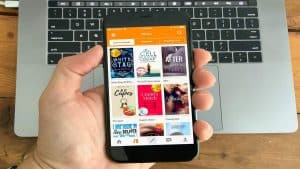
Online libraries encourage independent thinking by making it easier to compare books and research on the same issue. A searchable collection, including services described as a Z library, offers access; the thinking comes from judging what you find, tracing evidence, and deciding what sources support.
Why digital access can broaden a reader’s thinking
A question that once required a trip through several shelves can now lead to books, essays, archives, and research papers in a few searches. That convenience makes it easier to consult more than one account and follow a question from a historical overview to a scientific paper or a social analysis.
Cross-disciplinary reading can show that a familiar problem has more than one useful frame. A history of public health can explain how policy developed, while epidemiology addresses disease patterns. Personal accounts show how policy affected daily life. Each source answers different questions, making a simple explanation harder to accept without examination.
Access is an opportunity, not a lesson in itself. A reader who opens only the first result may end up with the same narrow view as someone who consulted only one shelf. A Free library or other collection supports independent judgment when readers choose sources deliberately and compare them.
How digital collections turn reading into independent research
A productive search begins with a question specific enough to guide reading but open enough to change. Select sources that approach the issue differently, inspect their context, then revise the question if the evidence points elsewhere. Downloading a stack of ebooks without a question can leave the research unfocused.
E-library catalogs offer clues through metadata such as author, publisher, subject, edition, and date. Use subject terms to find related works, then check linked references to trace an argument to its sources. Those references can lead to primary documents or contrasting interpretations. Full-text search helps locate relevant passages, but a high search position or polished metadata does not prove reliability.
A searchable site such as z-library.me is an example of a digital resource, not a guarantee of lawful or reliable material. Availability and licensing can change, and legal status varies by jurisdiction. Check a service’s current terms and local rules. For each source, assess who wrote it, where and when it was published, whether claims are cited, and whether the copy is authorized.
The habits that turn more books into better judgment
Compare interpretations before deciding what a source establishes. One author may describe a policy’s aims; another may evaluate its outcomes; a primary document may show what officials said at the time. Consider both points of agreement and differences in evidence.
Summarizing and evaluating are separate tasks. A summary says what an author argues. Evaluation asks whether the evidence supports that argument, what assumptions shape it, and what information is missing. As you read, record claims, page or section details, citations, and points of disagreement.
Then write a short synthesis in your own words. This helps identify gaps that notes alone may leave unclear.
Information overload is a practical risk. Narrow the question when searches produce too many results. Reading fewer relevant sources closely usually leads to better judgment than skimming dozens.
Where to start with a focused reading question
Use a four-step routine: write one specific question; find an introductory source; add a contrasting interpretation or primary source; record what changed in your view and what remains uncertain. “How did a particular city change its water policy after an outbreak?” is easier to research than “What is public health?”
For lawful access, start with public-domain collections, open educational resources, institutional repositories, or lending through a public or university library. These are different rights and access models: public-domain works are no longer under copyright, open-access materials are released for broad use under stated terms, and library-licensed books are lent under a license. Free-to-read does not necessarily mean open access. A listing of Free books is not proof of permission. Check copyright status, provenance, edition, completeness, and access terms before downloading.
Before ending a session, check whether a source supports each claim in your answer and note what evidence would resolve the remaining question.